

Need Help with Trademark Registration ?
Fill Up the below Mentioned Form
Difference between ™ & ® ?
The ™ (Trademark) and ® (Registered Trademark) symbols indicate different levels of trademark protection.
™ (Trademark Symbol):
Used for a trademark that is not yet officially registered but is being claimed by a business or individual.
It provides some level of protection by signaling to others that the name, logo, or slogan is being used as a trademark.
It does not offer legal rights or enforcement under trademark laws.
® (Registered Trademark Symbol):
Used only for trademarks that have been officially registered with the Trademark Registry.
Grants the owner exclusive legal rights to the trademark and the ability to take legal action against infringement.
Unauthorized use of the ® symbol for an unregistered trademark is illegal and can lead to penalties.
Need Help with Trademark Registration ?
Fill Up the below Mentioned Form
Difference between ™ & ® ?
The ™ (Trademark) and ® (Registered Trademark) symbols indicate different levels of trademark protection.
™ (Trademark Symbol):
Used for a trademark that is not yet officially registered but is being claimed by a business or individual.
It provides some level of protection by signaling to others that the name, logo, or slogan is being used as a trademark.
It does not offer legal rights or enforcement under trademark laws.
® (Registered Trademark Symbol):
Used only for trademarks that have been officially registered with the Trademark Registry.
Grants the owner exclusive legal rights to the trademark and the ability to take legal action against infringement.
Unauthorized use of the ® symbol for an unregistered trademark is illegal and can lead to penalties.
Register Your Trademark & Protect Your Brand Name From Intruders with SP Legal Consultants
A trademark is a distinctive mark, logo, name, symbol, letter, figure, or word used by individuals, firms, or corporations to uniquely identify their goods or services, ensuring they stand apart from competitors. It serves as a crucial branding tool, allowing consumers to differentiate between products or services in the marketplace.
Register Your Trademark & Protect Your Brand Name From Intruders with SP Legal Consultants
A trademark is a distinctive mark, logo, name, symbol, letter, figure, or word used by individuals, firms, or corporations to uniquely identify their goods or services, ensuring they stand apart from competitors. It serves as a crucial branding tool, allowing consumers to differentiate between products or services in the marketplace.
What are The Eligibility Criteria for Trademark Registration
Upon successful registration and issuance of the certificate, the ® symbol can be used, signifying legal protection. A registered trademark remains valid for ten years from the registration date and must be renewed periodically to maintain its exclusivity.
What are The Eligibility Criteria for Trademark Registration
Trademark registration in India is governed by the Trade Marks Act, 1999, which grants exclusive rights to the owner for the sale, manufacture, and use of the registered brand. Any individual, proprietor, company, or legal entity can apply for a trademark. Once the application is submitted, the "TM" symbol can be used within days. The Trade Mark Registry typically takes 6-8 months to register a trademark if no objections are raised. However, if an objection arises, the process may extend to 18 months.
Upon successful registration and issuance of the certificate, the ® symbol can be used, signifying legal protection. A registered trademark remains valid for ten years from the registration date and must be renewed periodically to maintain its exclusivity.
Kinds Of Trademark Registration in India
Our Legal Expertise - Comprehensive Legal Services Tailored to Your Needs Categories:
Service Mark
A service mark is comparable to a product mark representing a service rather than a product. The primary function of a service mark is to differentiate its proprietors from the owners of other benefits. Accordingly, trademark applications submitted under trademark classes 35-45 may be classified as service marks since they represent a service.
MARKS IN THE SERIES
These are the marks that have been registered for usage before or after a chain of items that share a similar suffix, prefix, or symbol.
MARK OF SOUND
A sound mark is a sound that may be connected to a product or service that originates from a certain provider. Sound logos, often known as audio mnemonics, appear at the beginning and end of ads.
Service Mark
A service mark is comparable to a product mark representing a service rather than a product. The primary function of a service mark is to differentiate its proprietors from the owners of other benefits. Accordingly, trademark applications submitted under trademark classes 35-45 may be classified as service marks since they represent a service.
MARKS IN THE SERIES
These are the marks that have been registered for usage before or after a chain of items that share a similar suffix, prefix, or symbol.
MARK OF SOUND
A sound mark is a sound that may be connected to a product or service that originates from a certain provider. Sound logos, often known as audio mnemonics, appear at the beginning and end of ads.
Background of Trademark Registry
The Trademark Registry was established in 1940, with the Trademark Act coming into effect in 1999. Today, the Trademark Registry operates as the functional authority responsible for implementing the provisions of the Act. As the governing body, it oversees all trademark-related regulations and ensures compliance with the Indian Trademark Act.
The headquarters of the Trademark Registry is located in Mumbai, with regional offices in Delhi, Ahmedabad, Chennai, and Kolkata. When a trademark is registered, it is first governed under the Trademark Act of 1999 and subsequently recorded with the Trademark Registrar. Before approval, the registrar thoroughly examines the application to ensure it meets all legal requirements outlined in the Act.
Background of Trademark Registry
The Trademark Registry was established in 1940, with the Trademark Act coming into effect in 1999. Today, the Trademark Registry operates as the functional authority responsible for implementing the provisions of the Act. As the governing body, it oversees all trademark-related regulations and ensures compliance with the Indian Trademark Act.
The headquarters of the Trademark Registry is located in Mumbai, with regional offices in Delhi, Ahmedabad, Chennai, and Kolkata. When a trademark is registered, it is first governed under the Trademark Act of 1999 and subsequently recorded with the Trademark Registrar. Before approval, the registrar thoroughly examines the application to ensure it meets all legal requirements outlined in the Act.
What are the Trademark Classes?
There are 45 trademark classes, and all goods and services are classified according to these classes. You must exercise extreme caution while selecting the classes since they will affect the validity of your trademark for your company's products/services. If your company sells various goods and services that fall into several classes, you must guarantee that you may file for a trademark under all of the appropriate classes.
In India, some of the most common trademark classes are:
Class 9 consists of mobile software (App) and electronics.
Readymade Clothing is included in Class 25.
Class 35: involves business management and advertising, online retailing or wholesaling, e-commerce.
Education and entertainment are included in Class 41.
What are the Trademark Classes?
There are 45 trademark classes, and all goods and services are classified according to these classes. You must exercise extreme caution while selecting the classes since they will affect the validity of your trademark for your company's products/services. If your company sells various goods and services that fall into several classes, you must guarantee that you may file for a trademark under all of the appropriate classes.
In India, some of the most common trademark classes are:
Class 9 consists of mobile software (App) and electronics.
Readymade Clothing is included in Class 25.
Class 35: involves business management and advertising, online retailing or wholesaling, e-commerce.
Education and entertainment are included in Class 41.
Steps Involved in The Plan of Trademark Registration
Exceptional Rights
A registered trademark grants the owner exclusive rights over its use. The owner may apply the same trademark to all goods and services falling within the designated class(es) specified in the application. Additionally, the proprietor has the authority to prevent others from using the mark within the registered class(es) and can initiate legal action in case of any unauthorized usage or infringement.
Increases Trust and Loyalty
Trademarks signify a product's or service's reputation and quality. Registering a trademark increases client confidence and recognition in the market. Furthermore, it contributes to the establishment of loyal and long-term customers who will continually choose your trademarked brand over others.
Steps Involved in The Plan of Trademark Registration
Exceptional Rights
The registered trademark owner has complete control over it. The owner may use the same trademark for all other items that fall within the designated class(es) in the application. Furthermore, the proprietor owns the trademark and can prohibit others from using it in the class(es) in which it is registered. It also gives the owner the ability to sue for any unauthorised violation.
Increases Trust and Loyalty
Trademarks signify a product's or service's reputation and quality. Registering a trademark increases client confidence and recognition in the market. Furthermore, it contributes to the establishment of loyal and long-term customers who will continually choose your trademarked brand over others.
Selection of a Trademark
Remember to select a unique and distinct mark to represent your organisation. Another critical aspect is determining which class you belong to. There are now 45 kinds of products and services for which a trademark can be registered. Classifications 1–34 are for products, whereas classes 35–45 are for services.
Search for The Mark
Once you've decided on a mark, you should run a search to see if it's comparable to an already registered mark. You may do this yourself by visiting the Controller General's website for Patents, Designs, and Trademarks. A public search option is available on the website. After selecting this option, you must select your class and search the online database.
Application Submission
🔴9,000 rupees or 10,000 rupees -- If you are not a start-up, small business, or individual, you will fall into this category. You must pay Rs. 9,000 if you register the form electronically, or Rs. 10,000 if you file the form in person with the Office of TradeMarks.
🔴4,500 rupees or 5,000 rupees -- This category includes individuals, small businesses (with MSME), and new businesses. The fee for e-filing the form is Rs. 4,500, or Rs. 5,000 if you file the form in person.
Make cautious not to make any mistakes when filling out the form since this may result in delays or even rejection of the application. You must fill out all the requirements and provide an image of the trademark with 9 by 5 cm dimensions. You may be needed to submit five copies of the same document. When filing, the whole file must be supplied with two duplicates.
Vienna Codification Procedure
The Vienna Categorisation, often known as the Vienna Codification, is an international classification of trademark sign components created by the Vienna Agreement (1973). Following the Trademark registration application filing, the Trademark Registrar will file the Vienna classification to the Trademark established on the marks' figurative components. Accordingly, the trademark application status is normally indicated as "Sent to Vienna Codification" while this work is being done.
Selection of a Trademark
Remember to select a unique and distinct mark to represent your organisation. Another critical aspect is determining which class you belong to. There are now 45 kinds of products and services for which a trademark can be registered. Classifications 1–34 are for products, whereas classes 35–45 are for services.
Search for The Mark
Once you've decided on a mark, you should run a search to see if it's comparable to an already registered mark. You may do this yourself by visiting the Controller General's website for Patents, Designs, and Trademarks. A public search option is available on the website. After selecting this option, you must select your class and search the online database.
Application Submission
🔴9,000 rupees or 10,000 rupees -- If you are not a start-up, small business, or individual, you will fall into this category. You must pay Rs. 9,000 if you register the form electronically, or Rs. 10,000 if you file the form in person with the Office of TradeMarks.
🔴4,500 rupees or 5,000 rupees -- This category includes individuals, small businesses (with MSME), and new businesses. The fee for e-filing the form is Rs. 4,500, or Rs. 5,000 if you file the form in person.
Make cautious not to make any mistakes when filling out the form since this may result in delays or even rejection of the application. You must fill out all the requirements and provide an image of the trademark with 9 by 5 cm dimensions. You may be needed to submit five copies of the same document. When filing, the whole file must be supplied with two duplicates.
Vienna Codification Procedure
The Vienna Categorisation, often known as the Vienna Codification, is an international classification of trademark sign components created by the Vienna Agreement (1973). Following the Trademark registration application filing, the Trademark Registrar will file the Vienna classification to the Trademark established on the marks' figurative components. Accordingly, the trademark application status is normally indicated as "Sent to Vienna Codification" while this work is being done.
A cup of coffee with us could be the first step toward securing your legal interests and strengthening your business for the future.
A cup of coffee with us could be the first step toward securing your legal interests and strengthening your business for the future.
Online Procedure of Trademark Registration
Search for The Brand Name
Choosing a different and offbeat brand name is a sensible choice because most generic names are already in the hands of someone. Furthermore, settling on a name necessitates a rapid research procedure to guarantee that you are not selecting a brand name that is already in use. The best thing is that you may develop a distinctive brand name by inventing or coining some phrases and combining them with generic terms.
Submitting a brand name registration application
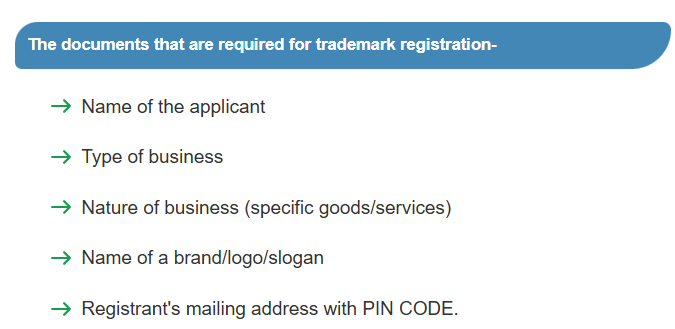
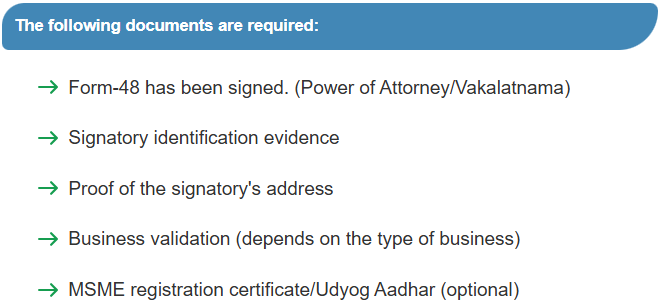
The following supporting papers must be presented with the application for online trademark registration:
Business Registration Evidence: Based on your registered business (for example, sole proprietorship, etc.), you must produce identification proof of the company's directors as well as address proof. In the case of a firm, the address evidence of the company must be presented.
The proposed mark's proof of claim (if applicable) can be utilised in another nation.(sales invoices mentioning the brand name)
The applicant must sign a power of attorney (Vakalatnama)
Examining the procedure of the brand name application
Once the application is submitted, the Registrar of Trademarks will review it to see if you fulfilled specific requirements and if your brand name fits with current legislation. Furthermore, there must be no similarity (visual or phonetical) of identity with any existing brand which is pending for registration.
Publication of Your Trademark in the Indian Trade Marks Journal
After the examination process, if no objections are raised by the Trademark Registry within the stipulated time frame, the Registrar of Trademarks will approve and publish the trademark in the Indian Trade Marks Journal. This publication is a critical step in the registration process, allowing public scrutiny of the proposed trademark.
Once published, third parties have four months from the date of publication to file an opposition if they believe the trademark is identical or similar to an existing one. If no opposition is filed within this period, the Registrar will proceed with issuing the Trademark Registration Certificate.
Trademark Opposition Process
If a third party files an opposition within the four-month window, the Registrar of Trademarks will notify the applicant with a copy of the opposition notice. The applicant must then submit a counter-statement within two months to defend the trademark application. Failure to respond within this period results in the application being deemed abandoned.
Both the opposing party and the applicant are required to pay a government fee of Rs. 2,700 while filing their respective notices.
However, if no opposition is raised within the stipulated time, the trademark proceeds to registration without the need for this process.
Trademark Opposition Hearing
If an opposition is filed and a counter-statement is submitted on time, the Registrar will acknowledge receipt and notify both parties.
Both parties must then present evidence supporting their claims. Under Rule 45, evidence must be submitted within the prescribed period. Alternatively, under Rule 46, the applicant may inform the Registrar that they will rely solely on the counter-statement already submitted.
Following the submission of evidence, the Registrar will schedule a hearing where both parties will be given an opportunity to present their arguments. Based on the facts presented, the Registrar will either approve or reject the trademark application.
Issuance of the Trademark Registration Certificate
If no opposition is filed within the designated time frame, or if the opposition is resolved in favor of the applicant, the Registrar will approve the trademark registration.
Upon successful registration, the Trademark Registration Certificate will be issued with the official stamp of the Trademark Registry. Once received, the trademark owner can legally use the registered trademark symbol (®) next to their brand name, signifying its official protection under trademark law.
Online Procedure of Trademark Registration
Search for The Brand Name
Choosing a different and offbeat brand name is a sensible choice because most generic names are already in the hands of someone. Furthermore, settling on a name necessitates a rapid research procedure to guarantee that you are not selecting a brand name that is already in use. The best thing is that you may develop a distinctive brand name by inventing or coining some phrases and combining them with generic terms.
Submitting a brand name registration application
The following supporting papers must be presented with the application for online trademark registration:
Business Registration Evidence: Based on your registered business (for example, sole proprietorship, etc.), you must produce identification proof of the company's directors as well as address proof. In the case of a firm, the address evidence of the company must be presented.
The proposed mark's proof of claim (if applicable) can be utilised in another nation.(sales invoices mentioning the brand name)
The applicant must sign a power of attorney (Vakalatnama)
Examining the procedure of the brand name application
Once the application is submitted, the Registrar of Trademarks will review it to see if you fulfilled specific requirements and if your brand name fits with current legislation. Furthermore, there must be no similarity (visual or phonetical) of identity with any existing brand which is pending for registration.
Publication of Your Trademark in the Indian Trade Marks Journal
After the examination process, if no objections are raised by the Trademark Registry within the stipulated time frame, the Registrar of Trademarks will approve and publish the trademark in the Indian Trade Marks Journal. This publication is a critical step in the registration process, allowing public scrutiny of the proposed trademark.
Once published, third parties have four months from the date of publication to file an opposition if they believe the trademark is identical or similar to an existing one. If no opposition is filed within this period, the Registrar will proceed with issuing the Trademark Registration Certificate.
Trademark Opposition Process
If a third party files an opposition within the four-month window, the Registrar of Trademarks will notify the applicant with a copy of the opposition notice. The applicant must then submit a counter-statement within two months to defend the trademark application. Failure to respond within this period results in the application being deemed abandoned.
Both the opposing party and the applicant are required to pay a government fee of Rs. 2,700 while filing their respective notices.
However, if no opposition is raised within the stipulated time, the trademark proceeds to registration without the need for this process.
Trademark Opposition Hearing
If an opposition is filed and a counter-statement is submitted on time, the Registrar will acknowledge receipt and notify both parties.
Both parties must then present evidence supporting their claims. Under Rule 45, evidence must be submitted within the prescribed period. Alternatively, under Rule 46, the applicant may inform the Registrar that they will rely solely on the counter-statement already submitted.
Following the submission of evidence, the Registrar will schedule a hearing where both parties will be given an opportunity to present their arguments. Based on the facts presented, the Registrar will either approve or reject the trademark application.
Issuance of the Trademark Registration Certificate
If no opposition is filed within the designated time frame, or if the opposition is resolved in favor of the applicant, the Registrar will approve the trademark registration.
Upon successful registration, the Trademark Registration Certificate will be issued with the official stamp of the Trademark Registry. Once received, the trademark owner can legally use the registered trademark symbol (®) next to their brand name, signifying its official protection under trademark law.
Documents Needed for Trademark Registration